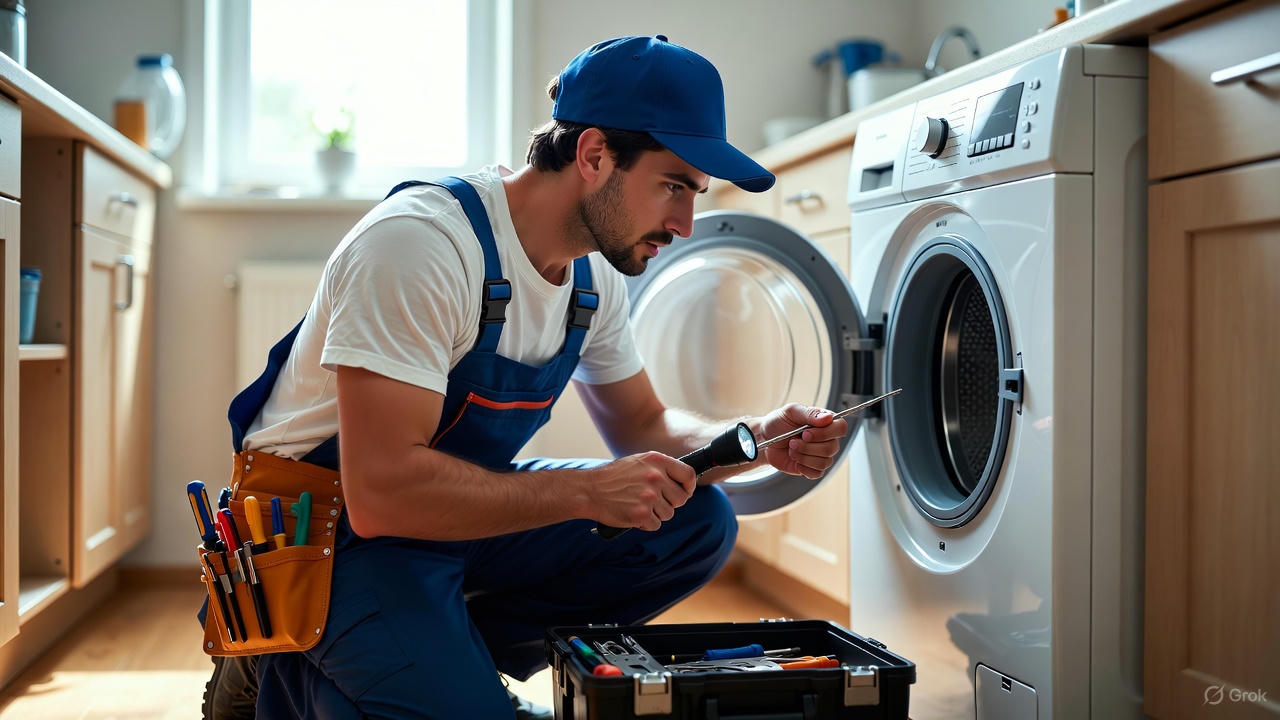
washing machine repair
Introduction
When your washer stops working, life gets messy fast. This guide explains washing machine repair in plain, simple language. I’ll share easy checks you can do at home, plus when to call a professional. I’ve fixed a few of my own machines and walked neighbors through repairs — so I’ll use real examples to help you feel confident. We’ll cover top-load and front-load problems, common parts, and brand-specific tips for Samsung and Maytag machines. If you prefer a nearby expert, I’ll show how to search for washing machine repair near me and what to ask. By the end, you’ll know whether a repair is DIY-safe or needs a trained technician.
How a Washing Machine Works (Quick Overview)
A washer has a drum, motor, pump, hoses, and control panel. Water fills the drum, the motor spins the clothes, and the pump drains the water. Most breakdowns come from worn belts, clogged hoses, faulty pumps, or control board glitches. Knowing the basic parts helps you describe the problem when searching for washing machine repair near me. I once found a loud washer simply had a sock stuck between drum and tub — an easy fix. Learning the basics saves time and often money because you can rule out small things before calling a pro.
Simple Safety Steps Before Any Repair
Safety first. Unplug the washer and shut off the water valves before touching anything. Wear gloves for sharp edges and keep kids and pets away. If water is leaking, put towels down and turn off the home’s main water supply if needed. Even for small fixes, following these basics prevents shocks, floods, or more damage. I’ll explain how to test a part without risking safety. This is the step most homeowners skip, and it’s the cause of many avoidable accidents.
Troubleshooting: Washer Won’t Start
If the washer won’t start, check power and the door or lid switch. Try another outlet or reset the breaker. For front-load washers, the door must latch fully. Electronic control boards may need a reset (unplug for one minute). When these checks don’t work, contact a professional for washing machine repair. A trained tech will test electrical components safely and may fix the control board or replace a faulty switch. Calling a local service can save time if you already tried the basic steps.
Troubleshooting: Washer Doesn’t Spin or Agitate
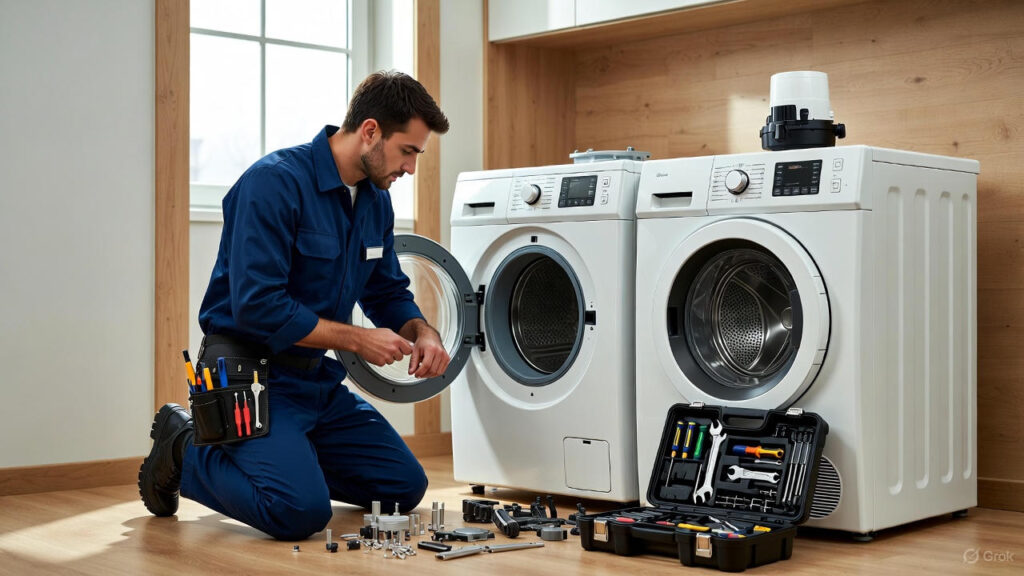
When the drum won’t spin, inspect the belt on older models and the motor coupling on newer ones. For direct-drive machines, the motor or clutch could be failing. Also check for overloaded loads — sometimes clothes get tangled and block movement. If you live near a repair shop, search “washing machine repair near me” and ask about motor, clutch, and belt diagnostics. I once helped a neighbor whose washer stopped spinning; a torn belt was the issue and a quick replacement fixed it.
Troubleshooting: Leaks and Water Problems
Leaks come from hoses, door gaskets, or pumps. Check hose connections behind the machine and inspect the inlet hoses for small cracks. Front-load machines often leak from worn door seals. If your washer is not filling, test the water inlet valve and the household water supply. For persistent leaks, professional washing machine repair will diagnose pump failures or hidden cracks. Quick tip: keep a small notebook of when leaks happen — time, cycle, and water level — that helps a technician find the issue faster.
Brand-Specific Tips: Samsung Washing Machine Repair
Samsung washers are popular but sometimes show error codes. Write down any code and search the manual or online before calling. Common Samsung fixes include blocked pumps, drum bearing wear, and error codes related to water supply. If your machine is under warranty, contact Samsung or an authorized service provider. For out-of-warranty units, local specialists who list “samsung washing machine repair” can be a big help. I’ve seen Samsung issues resolved quickly by replacing a clog-prone drain pump.
Brand-Specific Tips: Maytag Washing Machine Repair
Maytag is known for durability, but parts like agitators, belts, and control boards may still fail. Maytag owners often face problems with excessive vibration or failure to spin. Look for firm, certified technicians who advertise “maytag washing machine repair” and ask about OEM parts. A real-case: a Maytag stopped mid-cycle due to a defective lid switch — simple part swap and the machine worked like new. Certified technicians sometimes return parts under warranty, so ask about return policies.
Brand Help: Sears Washing Machine Repair and Local Options
Sears used to be a go-to for appliance service, and some local Sears technicians still repair older models. If you own a legacy Sears washer, search “sears washing machine repair” as well as local appliance repair shops. Many independent repair shops have experience with older Sears and Kenmore models and can source compatible parts. If a store no longer supports a model, a local pro who handles many brands often has the knowledge and parts to fix it.
How to Find “Washing Machine Repair Near Me” (Smart Search Tips)
When you search for washing machine repair near me, include your city or neighborhood. Look for shops with good reviews, clear pricing, and a parts guarantee. Ask if they offer a service call fee and whether labor and parts are itemized. Request references or recent customer examples. I recommend checking two or three providers and asking about technician certifications. A local, well-reviewed team often beats a national chain on speed and personalized service.
Cost Guide: What Repairs Usually Cost
Simple repairs like replacing belts or door seals are usually inexpensive. Motor or control board replacements cost more. Labor rates vary by area, but expect a diagnostic fee plus parts and labor. When you call for washing machine repair, get a written estimate and ask about warranties on work and parts. I once paid a modest diagnostic fee that was applied to the repair — a fair approach. Don’t choose purely by price; read reviews and ask about guarantees.
When to Replace Instead of Repair
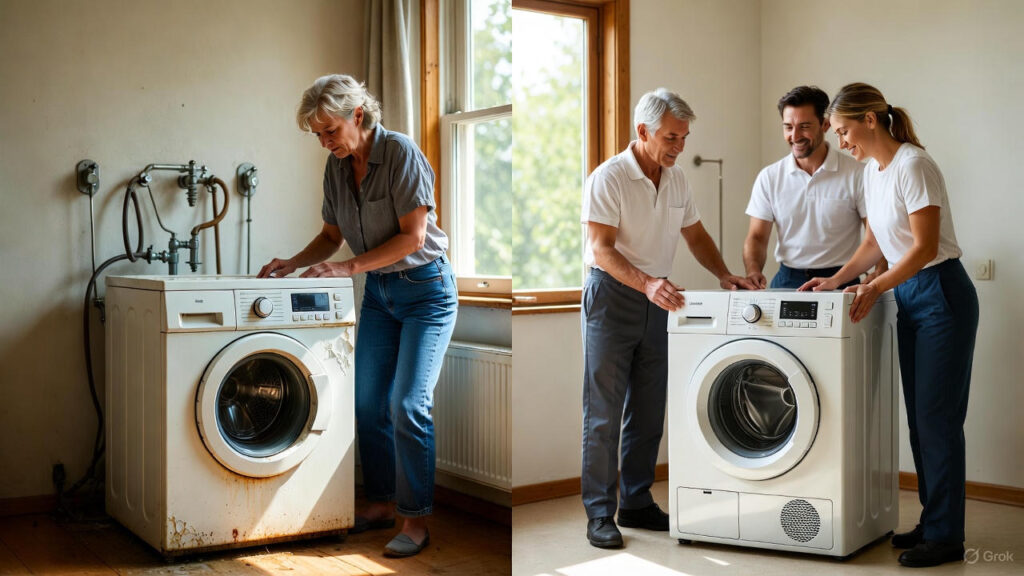
If the washer is old, repairs can be costly. Consider replacing if the repair costs more than half the value of a new machine, or if the machine needs multiple fixes in a short time. New washers are more energy efficient, which lowers long-term costs. Ask a technician for an honest assessment — good pros will recommend repair only when it’s sensible. If you’re leaning replace, ask the repair shop whether they recycle old machines or offer removal.
DIY vs. Professional: Making the Right Choice
Simple fixes like clearing a clogged pump or replacing a visible hose are good DIY projects. Complex electrical or sealed-tub repairs should go to pros. If you’re comfortable with tools, follow the manual and safety steps. When in doubt, call a certified technician. Real experience: I replaced a clogged pump filter and saved money, but I left an electrical board replacement to a pro — that was the safe, smart choice.
Parts, Warranties, and OEM vs. Aftermarket
Ask whether parts are OEM (original) or aftermarket. OEM parts are often pricier but match factory specs. Aftermarket parts can be fine if they come from reputable suppliers. Also ask about labor warranties — many shops offer 30 to 90-day guarantees. Keep receipts and serial numbers; this helps if a part fails soon after repair. A good repair shop will explain options clearly and not push unnecessary upgrades.
Helpful LSI Keywords and Phrases (for clarity)
You may see terms like appliance repair, washer troubleshooting, drum not spinning, leaking washer, front load, top load, drain pump, inlet valve, and error code. Knowing these words helps when reading manuals or when you talk to a technician. Use them in searches like “washer troubleshooting guide” or “drain pump replacement cost” to find targeted help and parts.
Example Repair Walk-Through (Real Example)
A friend’s front-load washer had a foul smell and stopped draining. We ran a clean cycle with a washer cleaner, checked the drain hose, and opened the pump filter to remove coins and lint. The smell improved and water drained normally. We documented the problem and the fix, which helped when the machine developed a new issue months later — the notes made the second diagnosis faster. Small records like this help technicians and prove you tried reasonable fixes before calling for washing machine repair.
What to Ask When You Call a Repair Service
Ask about technician experience, estimated diagnosis time, flat fees, part warranties, and whether they service your brand (Samsung, Maytag, Sears). Ask for references or recent reviews. If you want eco-friendly disposal of old machines, ask that too. Clear questions lead to better service and fewer surprises on the invoice.
Worn and Wound Watches — Why It’s Mentioned Here
You might see unrelated repair businesses like watch shops (for example, worn and wound watches) when looking for “repair” services online. Don’t be confused — compare business descriptions and stick with appliance specialists for washers. If a listing looks odd, read the full profile and reviews. This prevents hiring the wrong kind of repair shop for washing machine repair needs.
FAQs
1. How long will a typical washer repair take?
Small repairs like replacing a hose or belt often take one hour. More complex fixes such as control board replacement can take longer. A good technician will give a time estimate after diagnosis and explain parts needed.
2. Can I use aftermarket parts?
Yes, but choose reputable parts with a warranty. OEM parts match factory specs but may cost more. Ask the technician which option they recommend.
3. Is it worth repairing old washers?
If repair costs less than half of a new machine and the washer has no major issues, repair is worth it. For frequent breakdowns or very old units, replacement may be smarter.
4. How do I find reputable “washing machine repair near me”?
Search with your city name, read reviews, verify licensing if required locally, and ask about guarantees. Call two or three shops to compare prices and service details.
5. Are there common error codes I can check myself?
Yes. Most brands list codes in the manual. Write down the code, model number, and symptoms before calling support. This helps faster diagnosis for Samsung or Maytag washing machine repair.
6. What maintenance prevents big repairs?
Run a monthly drum-clean cycle, inspect inlet hoses yearly, avoid overloading, and clean the pump filter. Small steps prevent many common failures and help the washer last longer.
Conclusion — Take the Next Step
Washing machines break, but many problems are solvable. Try the safe checks here first: power, hoses, filter, and simple resets. If you need help, search “washing machine repair near me,” get a clear estimate, and ask about warranties. If you have a Samsung, Maytag, or older Sears model, mention the brand when you call. Share your story below — what broke, what you tried, and what helped — so others can learn. If you want, I can help draft a message to send to a repair shop. Let’s get your laundry running again.
| Read More Informative Blogs like this. Tap Here 👉 xxxxxxxxl Size CXX Clothing — Complete Guide |
About the Author


